|
Objective
The purpose of this assignment is use your spreadsheet to develop a feasible
detention pond design for one of the sites assigned to your group in lab.
The purpose of this part of the assignment is to estimate the
cost of cut-and-fill and the detention pond volume. This
application will support your designs for the
detention
pond project. Your spreadsheet should allow a user to enter the row and column
spacing of the elevation grid, the original elevations at each grid line intersection, and
the proposed elevation. In addition, your spreadsheet should
graph the original and the proposed elevations. Click here for a typical
layout for the input section of the cut-and-fill workbook. The data contained in
this table is available in spreadsheet form by clicking here
Cut-and-Fill Example data.
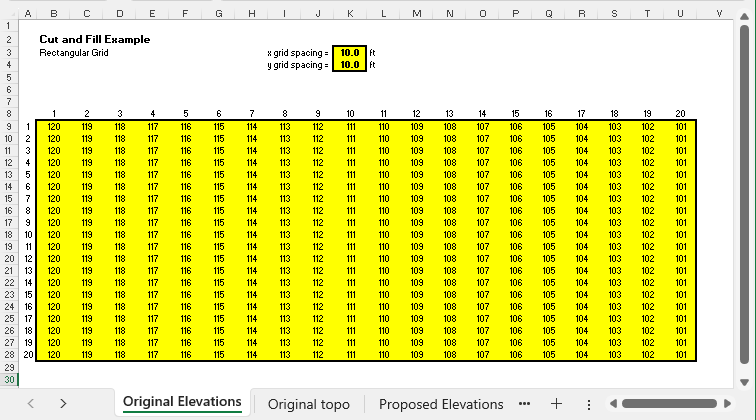
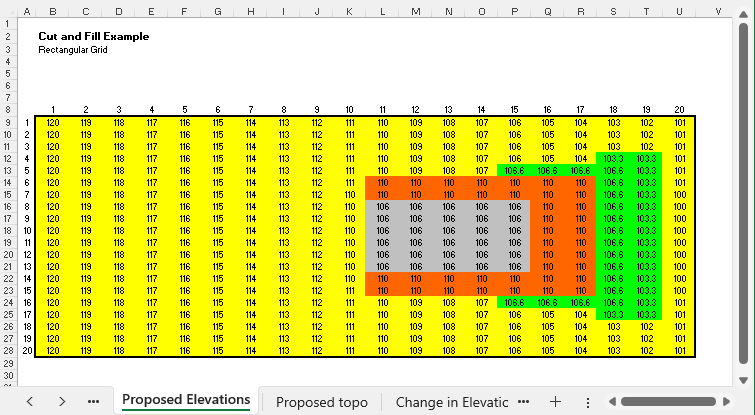
Your proposed elevations should be input on a separate worksheet in cells
corresponding to the original elevations. A set of proposed elevations for this example
problem are shown below. Note that the top of the proposed detention pond embankment is
colored orange, the outside lope
changes are in green, and the slope changes
inside the pond are in gray.
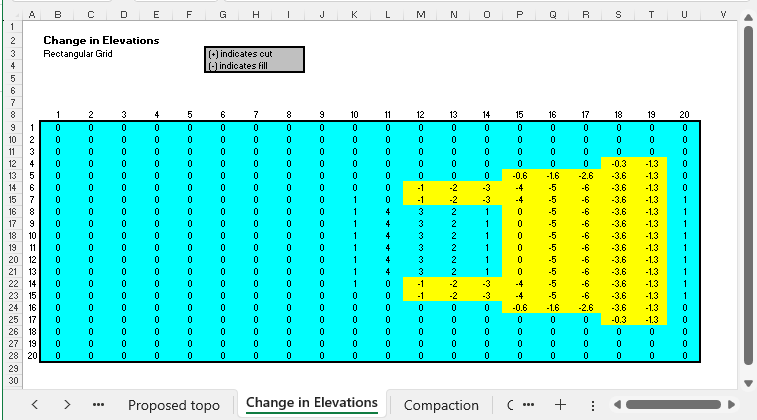
Once you have entered the original and the proposed elevations at the grid
points, simple subtract the proposed elevations from the original elevations to computer
the change-in-elevation value for each grid point. In this case, negative (-) values
will indicate fill points and positive (+) values will indicate cut values.
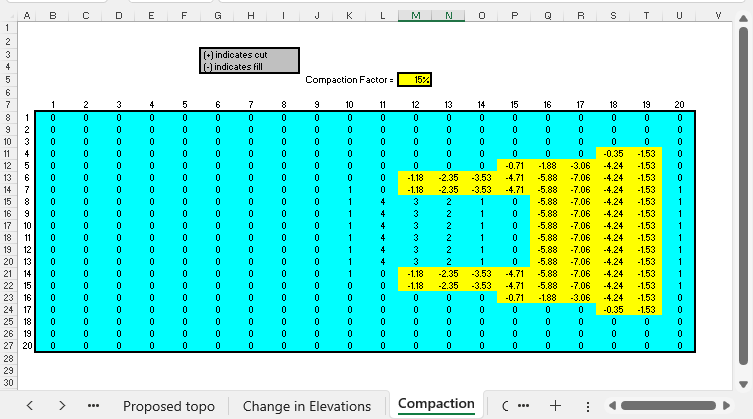
The user should also be able to enter a value for the lost of fill due to
compaction. Once the change-in-elevations are computed, adjust the fill values
(negative values) for compaction. To adjust each negative change-in-elevation value,
divided the value by (1 - %compaction). In the example show below, each
negative change-in-elevation value in divided by 80%. The adjustment for fill
effectively increases the amount of cut volume to balance the required compacted fill
volume.
After the the change-in-elevation values have been corrected for compaction, the volume
of cut-and-fill should be estimated. To calculate the value of cut-and-fill for each
grid cell, multiple the
average of the four corner
change-in-elevation values by the area of the grid cell [remember negative (-) area is
fill and (+) area is cut]. Sum the cut-and-fill volumes for all the grid cells to estimate
the total cut-and-fill for the entire site. Report if the cut-and-fill is balanced, or if
there is more cut or fill required to reach the proposed elevations. Also, compute
the total volume of cut and the total volume of fill required at the site. All volumes
should be reported in cubic yards (yd3).
Next, estimate the cost of the cut-and-fill earthwork. Recall, on-site cut and
fill costs $5 per yd3 and off-site fill costs $25 per yd3 and
off-site cut costs $15 per yd3.
Remember, if the cut and fill do not balanced, than the remaining material must be
removed/brought off-site at the off-site rate. An estimate for the cut and fill volumes
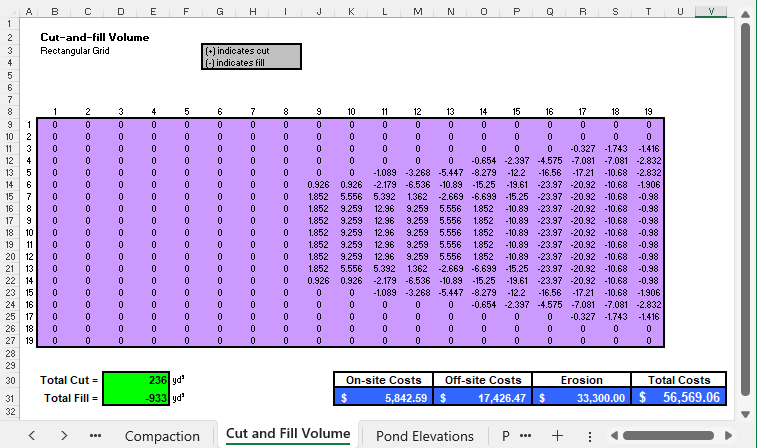
and the associated earthwork costs using the data presented in the example is shown below.
Note the volume calculations results (in purple)
have one less column and one less row in the worksheet due to the averaging of adjacent
cells - in other words, four cells in the proposed elevation worksheet define one volume
cell. The total cut and the total fill are shown in green
and the earth costs are in blue.
An estimate of the pond volume can be computed in a manner
similar to that used in the can-and-fill volume calculation. First, estimate a
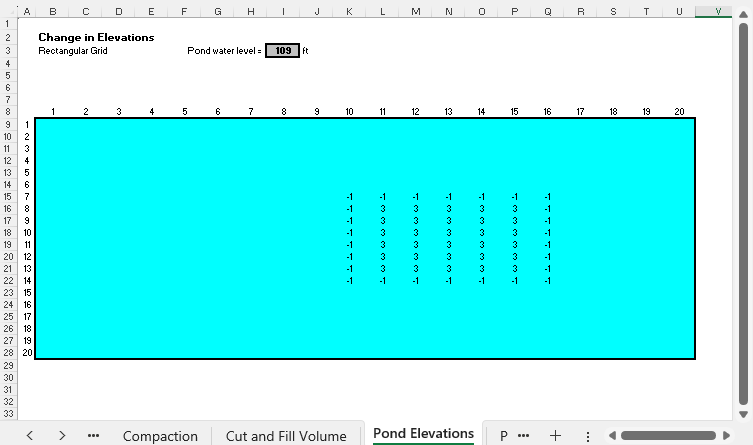
pond elevation by subtracting the
proposed elevations from the pond elevation. Inside the proposed embankment structure,
positive (+) values of the difference between the pond elevation and the proposed
elevations (DP) indicate that water is detained in the pond.
Negative (-) values of the DP indicate the proposed elevation
are above the pond elevation. Positive (+) values of DP outside
the embankment structure should be ignored in the pond volume calculation. Using the data
presented in the example above, the values of DP are shown in
the worksheet below. Note the proposed pond elevation is given in cell I3.
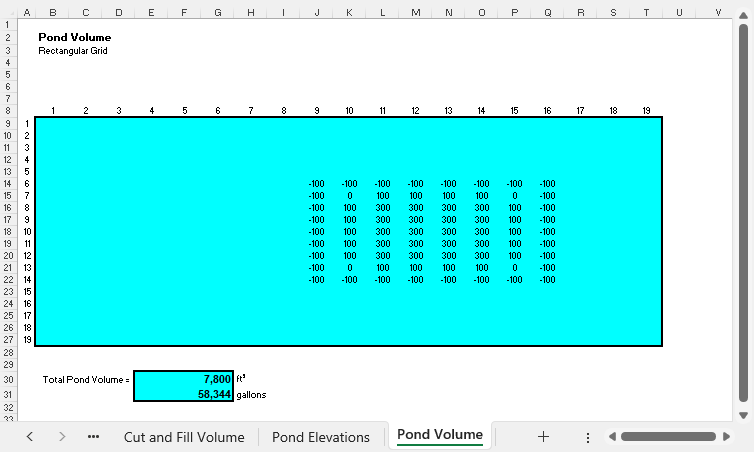
The pond volume for this example is computed in the worksheet shown below. Note the
volume is computed in ft3 and converted to gallons (1 ft3 =
7.48
gallons). Note that the positive (+) DP cells outside the
proposed embankment are deleted from the pond volume calculation.
This website was originally
developed by
Charles Camp for
CIVL
1112.
This site is maintained by the
Department of Civil Engineering
at the University of Memphis.
Your comments and questions are welcomed.
|


